Diagnosing Green Verdigris Stains on Brass Hardware in Leather Bags
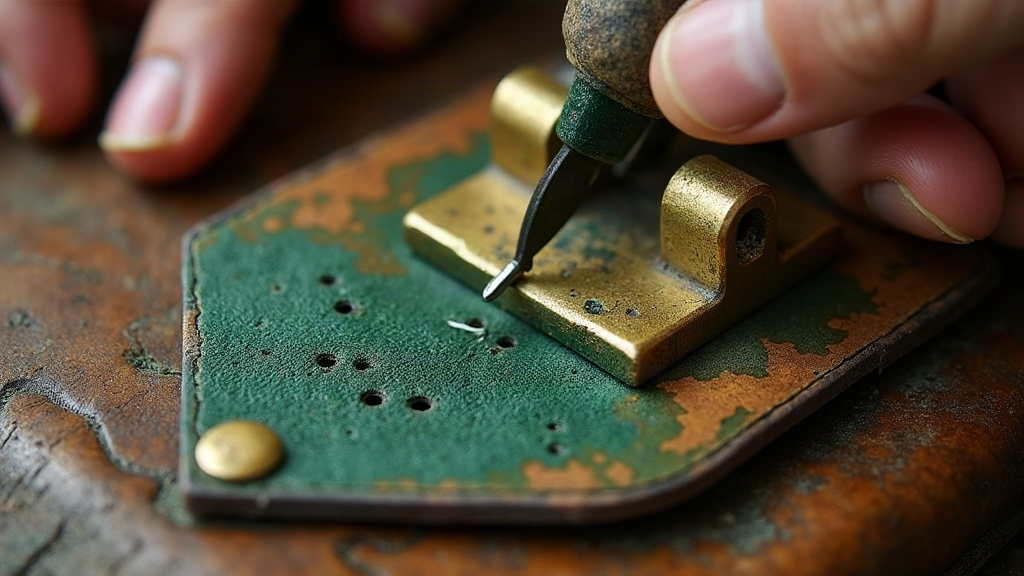
Green or bluish stains on brass hardware show up when the copper in the alloy reacts with moisture, oxygen, and acids in the air. On a leather bag, that reaction rarely stays put. It usually bleeds into the hide around the hardware, leaving a matching green shadow on the leather itself. Here’s the reassuring part: nine times out of ten, this is surface corrosion, not structural rot. You can diagnose it and fix it at home, as long as you’re patient about it.
What Verdigris Actually Is
Brass is just copper mixed with zinc. Expose that copper to moisture and the everyday pollutants floating around (sweat, salt air, perfume, cleaning sprays) and it starts forming copper carbonate or copper acetate. That’s the blue-green crust people call verdigris. On a leather bag, this residue migrates outward from buckles, zippers, rivets, and feet, staining the hide in a way that often looks far more alarming than the actual damage to the hardware underneath.
Diagnosing the Cause
Before you grab a cloth and start scrubbing, figure out why it happened. Skip this step and the stain just comes right back in a few months.
1. Moisture Exposure
- Bag left in humid storage (a basement, a closet with zero airflow)
- Got rained on and wasn’t dried right away
- Stored inside a plastic dust bag, which traps condensation like a mini greenhouse
Clue: Verdigris shows up evenly across all the hardware pieces, often paired with that musty, damp-leather smell.
2. Skin Contact and Sweat
- Handles, straps, or clasps get touched constantly
- Gets worse in summer or in sticky, humid climates
Clue: Staining clusters on handles and straps specifically, while the decorative feet or hardware on the back stay clean.
3. Chemical Exposure
- Perfume, hand sanitizer, or lotion residue
- A leather conditioner or cleaner with ammonia or an acidic pH
Clue: Irregular, localized green spots right where a spray or your hands typically land on the bag.
4. Low-Quality Plating
- Brass-plated zinc or steel hardware, common in budget bags, corrodes much faster than solid brass
- The plating wears thin at the edges first, exposing the base metal underneath
Clue: Greening starts at edges, screw heads, or any high-friction spot where the plating has worn down the most.
Is It Dangerous to the Leather?
Copper salts are mildly acidic. Left alone for months, they can chew into leather fibers and dyes right at the contact point, leaving discoloration or a brittle patch behind. It’s not going to eat through your bag overnight (you have time), but the sooner you treat it, the less likely you’ll end up with a permanent mark.
How to Clean It Safely
Step 1 — Dry brush. Grab a soft brass brush or an old toothbrush and knock off any loose, flaking crust. Don’t scrub hard, or you’ll just push the stain deeper into the leather.
Step 2 — Protect the leather. Slide a thin plastic card, or a strip of painter’s tape, around the edge of the hardware. This shields the hide while you work on the metal.
Step 3 — Treat the brass:
- Mix equal parts white vinegar and salt, or use half a lemon dipped in salt
- Apply it with a cotton swab, directly onto the hardware only, nowhere else
- Let it sit for 2-3 minutes, then wipe with a damp cloth and dry it immediately, no lingering moisture
- For stubborn spots, a dedicated brass polish (Brasso is the classic choice) works well. Just buff it off completely afterward
Step 4 — Treat the leather stain:
- Dab, don’t rub, using a leather-safe cleaner or diluted saddle soap
- For green stains that have really set in, a small amount of leather-safe oxalic acid rust remover can help. Test it on a hidden spot first, always
- Follow up with a leather conditioner to bring back the suppleness
Preventing It From Coming Back
- Dry the bag fully after it gets rained on, before you even think about storing it. Never seal damp leather inside plastic
- Store with airflow. A breathable cotton dust bag beats a plastic one every time
- Keep perfume and sanitizer away from anywhere the hardware touches
- Wipe hardware weekly with a dry microfiber cloth if you’re in a humid or coastal area (anyone near the ocean knows this drill)
- Apply a thin coat of microcrystalline wax (Renaissance Wax is a solid pick) to the hardware. It builds a moisture barrier without changing how the brass looks
- Check hardware quality before you buy. Solid brass simply outlasts plated alternatives when it comes to tarnish resistance
Conclusion
Green verdigris on brass bag hardware is a chemical reaction, nothing more. It doesn’t mean your bag is ruined. Track down the trigger (moisture, sweat, chemicals, or cheap plating), then treat the brass and the leather separately, gently and with targeted methods rather than brute force. Stick to a quick seasonal cleaning habit, store the bag properly, and your hardware stays bright while the leather stays stain-free for years to come.