Preparing Leather Tooling Leather for Humid Summer Workshops
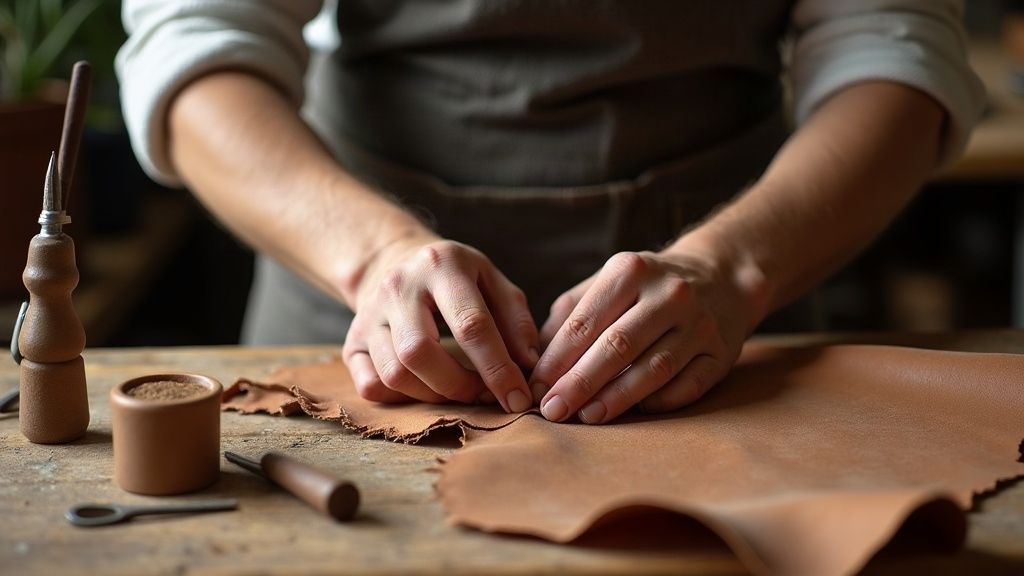
Humid summer air can turn a reliable leather tooling routine into a frustrating guessing game. Stamps slip, cuts blur, finished pieces warp after you’ve already sunk hours into them. The fix isn’t complicated, but it does mean treating your leather differently before and during sticky weather. Get that part right and you’ll keep getting crisp, professional results instead of mushy, uneven ones.
Why Humidity Changes Everything
Vegetable-tanned leather behaves like a sponge. It’s pulling in ambient moisture around the clock, not just the water you apply when you case it. In a dry climate, casing is predictable: wet it, wait, and you know roughly how long that ideal tooling window lasts. In a humid shop, that window shrinks, gets unpredictable, or sometimes never shows up at all because the leather can’t dry down to the right “case” state in the first place.
Signs your leather is fighting the humidity:
- Tool impressions come out soft, with no sharp edge
- Leather feels tacky or spongy instead of firm and cool to the touch
- Dye and paint sit wet longer and bleed at the edges
- Mold or mildew spots show up on stored hides within days, sometimes faster than you’d expect
Storing Leather Before Tooling
How you store hides matters just as much as how you case them. Skip this step and you’re fighting an uphill battle before you even pick up a stamp.
- Run a dehumidifier in the storage area. Shoot for under 55% relative humidity. A cheap consumer unit with a built-in hygrometer display is plenty for most home workshops, no need for anything industrial.
- Keep leather off concrete floors. Concrete pulls up ground moisture like a wick. Put hides on shelving a few inches off the floor, minimum.
- Skip airtight plastic bags for long-term storage. Sealed plastic traps moisture right against the leather, which is basically an invitation for mold. Breathable cotton or kraft paper wraps do the job better.
- Rotate your stock. Don’t let veg-tan sit untouched for months during summer. Check it every couple of weeks, look for spotting, give it a sniff for that musty smell.
Casing Leather in Humid Conditions
Casing sounds simple on paper: wet the leather, let it rest until it comes back to a cool, firm “case,” then tool it. Humidity throws a wrench into that resting stage specifically.
Adjust your technique like this:
- Use less water than you normally would. The leather’s already pulling moisture from the air, so oversaturating it just stretches out drying time and risks damaging the fibers.
- Case the night before when you can, somewhere air-conditioned, so the leather has a stable environment to settle into overnight.
- Judge firmness by feel, not by the clock. Forget the “one hour to case” rule in humid weather, it just doesn’t hold. Press a knuckle into the leather. It should feel cool and spring back a bit. If it stays dented or feels warm and soft, it’s not ready.
- Work in smaller sections. Case only what you’ll tool in the next 20-30 minutes. The rest of the hide sitting around just means it’s reabsorbing moisture while you work.
Workshop Environment Fixes
- Air conditioning is honestly your best weapon. AC dehumidifies as a byproduct of cooling the room, and that alone makes a noticeable difference even without a dedicated dehumidifier.
- Put a hygrometer right at your workbench, not just in the storage room. The air at your tooling station is what actually matters in the moment.
- Don’t tool near open windows or fans pulling in humid outside air straight onto your work surface.
- Keep a small fan moving air gently around the room (not pointed at the leather itself) so you’re not left with stagnant damp pockets.
Finishing and Drying in Summer
Once you’ve tooled a piece, dyes, antiques, and finishes all need airflow to cure properly. In humid weather:
- Dry pieces flat on a rack with room underneath for air to move, never stacked.
- Budget extra time. A finish that cures in 2 hours in dry weather might need 4 to 6 hours when it’s humid.
- Put on finish in thin passes rather than one heavy coat. A thick coat traps moisture underneath and never fully cures.
Preventing Mold on Finished and Raw Leather
- If you live somewhere consistently humid, wipe raw hides down occasionally with a leather-safe antifungal spray.
- Never box up finished pieces during summer. Open shelving or breathable bins only.
- Spot early mold (it shows up as white, powdery patches)? Wipe it with a cloth lightly dampened in diluted rubbing alcohol, let it dry completely, then condition.
Quick Summer Checklist
- Dehumidify storage and workshop space (aim for under 55% RH)
- Use less water when casing
- Judge leather by feel, not by a timer
- Tool in small, manageable sections
- Build in extra drying time for dye and finish
- Check stored hides regularly for mold
Conclusion
A humid summer shop doesn’t have to wreck your tooling projects. It comes down to controlling moisture at every stage, storage, casing, tooling, drying, instead of trying to muscle through and fight the weather mid-project. Get a dehumidifier, keep a hygrometer within arm’s reach, and train yourself to judge leather by feel rather than habit. Do that and you’ll keep turning out clean, crisp tooling work straight through the hottest months.