Building a Travel-Friendly Mini Leathercraft Tool Kit for Hotels
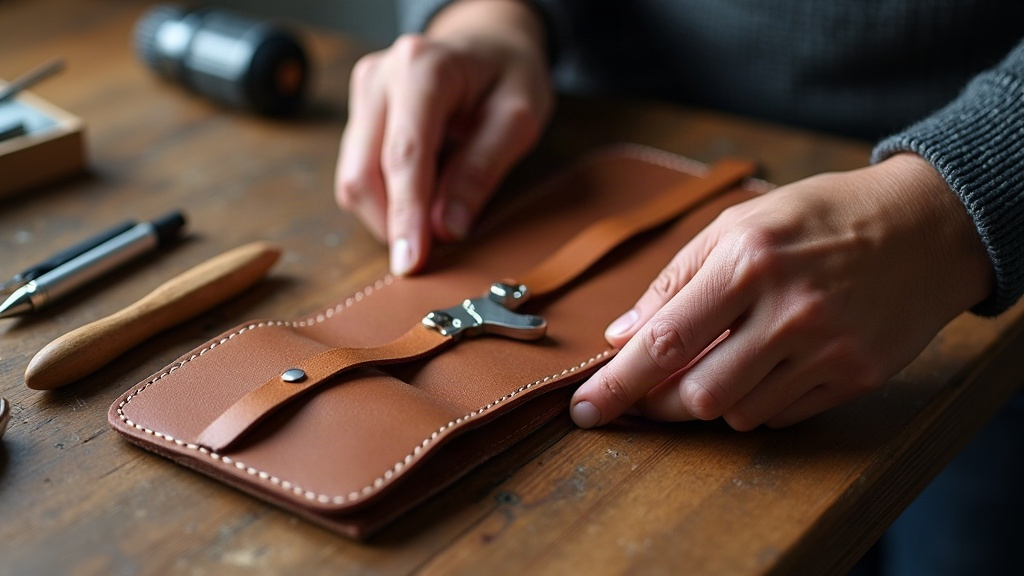
Taking Your Leathercraft Hobby on the Road: The Ultimate Travel Kit Guide
Work trip coming up? Weekend getaway? Neither one has to mean putting your leathercraft hobby on pause. Pack the right mini tool kit and a quiet hotel evening turns into real crafting time: stitch a wallet panel, condition a strap, finish some edge work. No need to haul your entire home workbench across state lines. Here’s exactly what to pack, how to pack it, and what’s better left on the shelf.
Why Build a Dedicated Travel Kit
Your full leatherworking setup, heavy mallets, oversized cutting mats, sharp-edged tools, simply doesn’t belong in a suitcase. A travel kit solves three problems at once:
- Space: Hotel rooms give you almost nothing to work with, usually just a desk or a nightstand.
- Security: Airport screening flags certain blades and awls, so you’ll need smarter substitutions.
- Focus: A stripped-down kit forces you to plan small, finishable projects instead of the ambitious ones that really need a full shop.
Think of this kit as a “project in a pouch.” Everything should fit in something the size of a dopp kit, or a chunky pencil case.
Core Tools Worth Packing
Cutting and Shaping
- Rotary cutter with snap-off blades instead of a fixed utility knife. Much easier to justify in checked luggage, and resharpening is as simple as snapping off a dull segment.
- Small acrylic ruler (6 inch) for straight cuts and measuring stitch spacing.
- Travel-size self-healing cutting mat (A5 size) that rolls or folds flat into your bag.
Stitching Essentials
- Two stitching needles, kept in a small pill case or a magnetic needle holder so they don’t go rolling under the hotel bed.
- Pre-waxed thread on a mini bobbin. Pick one neutral color, black or natural, and you’ve cut down on what you need to carry by half.
- A pricking iron or diamond awl tip, removed from its handle. Wrap the tip in felt and improvise a handle at your destination with a dowel or even a pen cap.
Finishing Tools
- Edge beveler (single size, usually a #2). This one size covers most small projects, cardholders, straps, that kind of thing.
- Slicker, or a folded piece of canvas, for burnishing edges. Skip the bulky wooden slicker and bring a smooth stone or glass burnisher instead, it can double as a makeshift mallet surface in a pinch.
- Mini bottle of edge paint or gum tragacanth, decanted into a 1oz travel bottle so you stay within liquid restrictions.
What to Leave at Home
- Full-size mallets. Swap in a small rubber hammer, or honestly, a hotel TV remote wrapped in cloth does the job for light tapping. Sounds strange, works fine.
- Large skiving tools. Just pre-skive your leather pieces before you leave the house.
- Oil-based dyes. They’re messy, often restricted in carry-on, and generally more trouble than they’re worth on the road. Bring pre-dyed leather instead.
Packing the Kit for TSA and Airlines
Whenever you can, pack sharp components (blades, awl tips, needles) in checked luggage. If you have to carry on:
- Store blades in a hard pencil case so they don’t damage your bag lining or flag extra screening.
- Keep liquids (dye, conditioner) under 100ml and in a clear quart bag.
- If asked, just say “craft tools.” Most leathercraft gear sails through checked baggage without a second look.
Choosing Hotel-Friendly Projects
Not every pattern survives a hotel room. Look for projects that:
- Use pre-cut leather pieces (cut and punch your holes at home, before the trip).
- Need minimal hammering, think hand-stitched cardholders, keychains, or small pouches.
- Skip wet-forming or heavy gluing, both of which can leave marks on hotel furniture you’d rather not explain.
A classic trifold wallet panel or a simple leather luggage tag makes a near-perfect “hotel-sized” project, small enough to wrap up in one or two evenings.
Protecting the Hotel Room
- Work on top of a folded towel or your travel cutting mat, always, to protect the desk surface.
- Keep a small trash bag handy for leather scraps and thread trimmings.
- If dye or conditioner spills, wipe it up immediately with a damp cloth. Don’t wait.
Conclusion
A travel-friendly mini leathercraft kit isn’t really about compromise. It’s about editing with intention. Choose multi-use tools, prep your materials ahead of time, pick projects that fit small spaces, and your craft keeps moving no matter where you’re sleeping that night. Pack smart, plan simple, and your next hotel stay might just turn out your favorite handmade piece yet.