Bridle Leather vs Harness Leather for Dog Collars: Full Guide
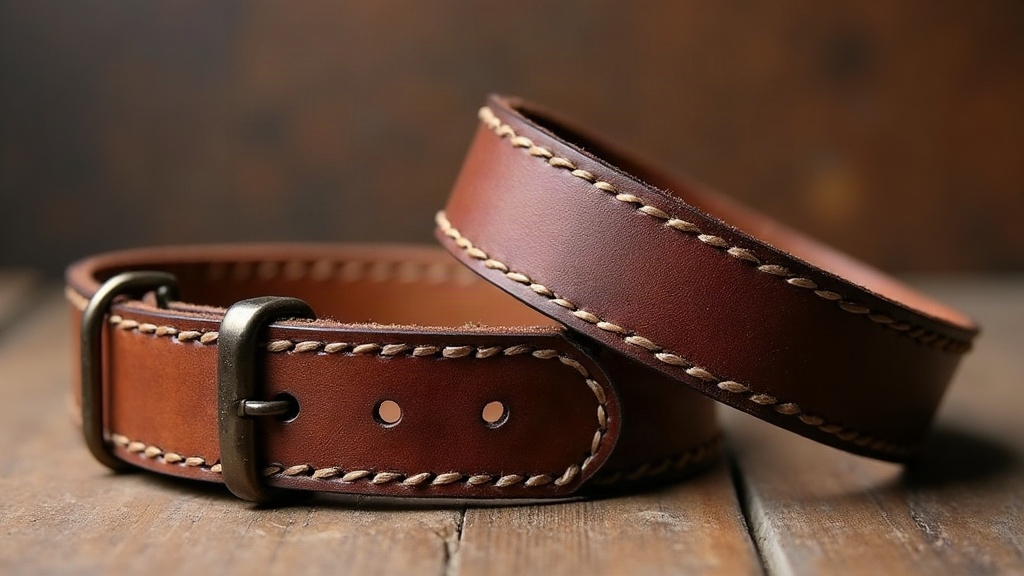
If you’re hand-stitching dog collars, the choice between bridle leather and harness leather really comes down to one trade-off: bridle leather gives you a smoother, pre-finished surface that’s easier to sew and looks polished the moment it comes off the bench, while harness leather is tougher, more fibrous, and rewards a hand-rubbed finish, but it takes more prep work to get there. Both are full-grain, vegetable-tanned hides built for hard use. The real differences show up in feel, workability, and how they age over time.
What Makes These Leathers Different
Bridle Leather
Bridle leather starts life as a vegetable-tanned hide, then gets hot-stuffed with waxes, oils, and tallow before being hand-glazed and burnished to that closed-grain, almost wet-look shine. This is the leather you’ll recognize from English saddlery, belts, and premium collars with that deep gloss.
- Surface feels slick and finished right out of the box
- Edges burnish beautifully with minimal effort
- Naturally resists water and dirt thanks to heavy stuffing
- Runs slightly more expensive per square foot than harness leather
Harness Leather
Harness leather is also vegetable-tanned, but it only gets a lighter grease/oil treatment and skips the glazing step entirely. Straight off the tannery shelf, it feels drier, more matte, more fibrous in your hands.
- Thicker fiber structure, often a bit stiffer at first
- Builds a rich patina as you handle and condition it over time
- Takes dye and hand-finishing well if you’re after a custom look
- Generally cheaper and easier to find in heavier weights (8-12 oz)
Durability for Dog Collars
Both leathers hold up to constant tension, moisture, and abrasion, which is basically the daily grind of a dog collar. In practical terms:
- Bridle leather resists water absorption better right out of the gate because of all that wax and oil loading. If your dog swims three times a week or lives outside, this matters.
- Harness leather edges out bridle slightly in raw tensile strength per ounce (it isn’t weighed down with as many stuffing compounds), but it needs regular conditioning, think neatsfoot oil or a leather balm, to catch up to bridle leather’s weather resistance.
For a daily-wear collar on an active dog, either one will outlast synthetic webbing without much fuss. The real split shows up after 2-5 years: bridle leather keeps its glossy look longer with barely any upkeep, while harness leather ages into something warmer and more rugged if you oil it now and then.
Workability for Hand-Stitching
This is usually where leatherworkers actually make up their minds.
Bridle Leather
- Needles glide through easily thanks to the lubricated fibers
- No real need for pre-waxed thread, since the leather’s already conditioned
- Burnishing edges goes faster because the existing glaze helps slicking compounds bond
Harness Leather
- Can feel drier to punch and stitch, especially once you get into thicker weights (10 oz and up)
- Works better if you pre-wax your thread and hit the edges with gum tragacanth or a water-based finish before burnishing
- Takes dye or hand-painting more readily since it hasn’t been glazed, which is great if you want custom colors instead of the usual natural tan or black
Cost and Sourcing
Budget roughly 15-25% more per square foot for name-brand bridle leather (English bridle or Wickett & Craig, for example) versus a comparable harness leather. For anyone making collars in small batches, that gap adds up fast. A 6-8 oz bridle hide can cost noticeably more than its harness counterpart, though honestly both sit in the mid-to-premium tier compared to basic tooling leather.
Which Should You Choose?
- Pick bridle leather if you want a ready-to-wear glossy finish, barely any post-production conditioning, and strong water resistance straight out of the box. Great for classic black or London tan collars.
- Pick harness leather if you want to play with color, prefer a rugged matte look that earns character over time, or you’re trying to keep material costs down without giving up a premium full-grain hide.
Both beat big-box pet store leather by a mile. That stuff is usually corrected-grain or bonded leather, and it tends to crack and delaminate within a year.
Final Thoughts
For hand-stitched dog collars, bridle leather and harness leather are both professional-grade materials. The decision really comes down to finish preference and workflow, not any shortfall in durability. Want a collar that looks finished the day you make it? Go bridle. Enjoy the process of conditioning and customizing, and want leather that tells a story as it ages? Harness leather is your better canvas. Either way, pair it with waxed linen or polyester thread, solid brass or stainless hardware, and proper edge finishing, and you’ll end up with a collar that outlasts the dog wearing it.